Vietnam AI Ecosystem 2026: Capabilities and Application Opportunities
In 2026, AI in Vietnam is shifting from experimenting with tools to building operational capability. Businesses care about where data is stored, how systems connect to processes, and how results are measured. The Vietnamese AI ecosystem is therefore shaped by policy, infrastructure, research, businesses, human resources, and application demand.
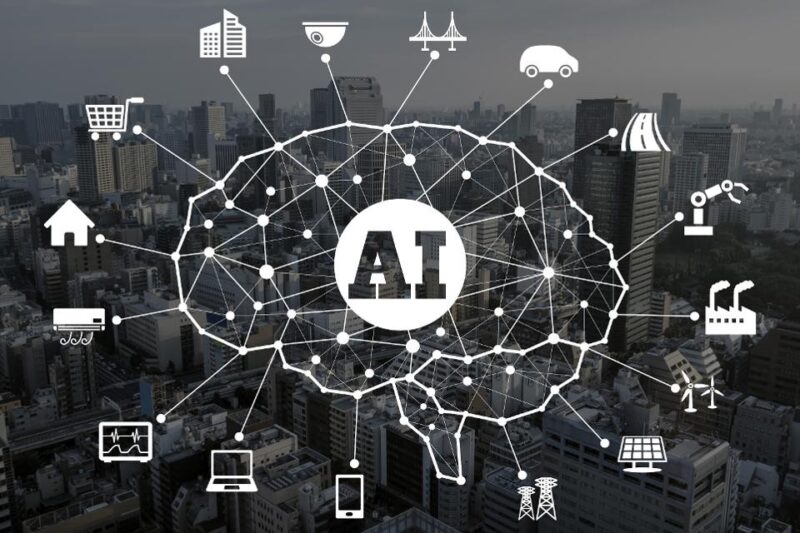
In 2026, AI in Vietnam is shifting from experimenting with tools to building operational capability. Businesses care about where data is stored, how systems connect to processes, and how results are measured. The Vietnamese AI ecosystem is therefore shaped by policy, infrastructure, research, businesses, human resources, and application demand.
1. What is the Vietnamese AI ecosystem?
The Vietnamese AI ecosystem is the network of parties that research, develop, supply, deploy, and govern AI in Vietnam. It includes not only companies that build models, but also regulators, universities and institutes, data centers, cloud providers, integrators, startups, investment funds, and user organizations.
A mature ecosystem must turn research into products, solve real needs, and keep improving from feedback. If one link is missing, AI easily stops at the demo stage.
The National Strategy on AI to 2030 centers on data, computing, human resources, innovation centers, and socio-economic applications. [Source: Government Electronic Information Portal]
2. Six foundational capabilities of Vietnam’s AI in 2026
- Policy: create a framework for experimentation, investment, and commercialization, while defining responsibility when AI processes data or supports decisions.
- Infrastructure: provide computing, storage, and connectivity. Businesses choose between public cloud, private cloud, or on-premise based on cost and data sensitivity.
- Data: Vietnamese-language data, industry documents, and internal processes are an advantage, but they need to be standardized and usage rights clarified.
- Models: the key capability is selecting, testing, and integrating language models, computer vision, Agentic AI, or robots into the problem at hand.
- Human resources: Vietnam has a dynamic engineering community but still lacks people who connect business operations, data, and technology.
- Cooperation: international centers expand opportunities for technology transfer. In 2025, Qualcomm opened an AI R&D center in Vietnam, focusing on generative AI, Agentic AI, devices, automotive, and IoT. [Source: Reuters]
3. Strengths and gaps in the ecosystem
The first strength is the ability to understand local needs. Domestic companies have access to the Vietnamese language, forms, processes, and communication culture when deploying solutions.
The application market spans manufacturing, finance, and public services. The ability to combine software with IoT, cameras, and robots also opens the way to physical AI.hoảng cách giữa bản mẫu và hệ thống ổn định vẫn nằm ở dữ liệu, tích hợp, giám sát mô hình, nhân lực triển khai và chi phí dài hạn.
4. Notable AI application opportunities in Vietnam
Public sector: lookup, classification, and shortening tasks that have clear criteria.có thể đo hiệu quả.
Enterprises: document search, report summarization, and customer care.
Manufacturing and logistics: defect inspection, predictive maintenance, and robot coordination.
Finance: anomaly detection, application classification, and customer support.
Healthcare and education: knowledge search, administrative support, and content personalization.
Energy and urban areas: sensor analysis, forecasting, and asset monitoring.
5. From AI models to enterprise AI platforms
A model is not yet a system. Real-world deployment also needs data, access permissions, APIs, logs, security, and exception-handling processes. This is an opportunity for Vietnamese platforms to focus on industry-specific Vietnamese, integration, private cloud, on-premise, and business customization.
With Multi-Agent AI, each agent handles one task and the agents are connected by an orchestration layer. TopAgentic/TopAgent IC can be introduced as an enterprise AI platform; each feature must stick to confirmed product documentation.
6. Challenges to address
- Data: scattered, unstandardized, and existing in multiple versions.
- Use cases: deployed as a trend, without measurable goals.
- Integration: AI is not connected to ERP, CRM, or approval workflows.
- Security: sensitive data is not classified and access is not restricted.
- Effectiveness: usage counts do not reflect time saved or quality.
- Accountability: no one is defined to review outputs and handle cases where the AI is wrong.
Solving these points requires coordination among business operations, technology, legal, information security, and end users.
7. Where should businesses start?
First, choose a process with high frequency, relatively available data, and measurable results. Next, define which step the AI supports, which step humans approve, and in which cases automation must stop.
Run a pilot on a small scale, build an evaluation dataset, and expand only when results are stable. Public cloud can serve general-purpose tasks; private cloud or on-premise is more suitable when data control is needed.
Conclusion
In 2026, Vietnam’s AI ecosystem has the foundation to move from scattered tools to systems tied to processes. The opportunity lies in localization, integration, and safe deployment. The advantage will belong to organizations that choose the right problems, standardize data, and measure effectiveness.
Frequently Asked Questions
What does the Vietnamese AI ecosystem include?
It includes policy, infrastructure, data, universities and institutes, human resources, businesses, investors, and user organizations.
What advantages does Vietnam have in developing AI?
The advantages include its engineering workforce, digital market, and ability to build solutions suited to the Vietnamese language.
Which sectors have many opportunities for AI applications?
Manufacturing, finance, logistics, healthcare, education, energy, and the public sector all have potential.
Can small businesses apply AI?
Yes. They should choose clear tasks, use existing platforms, and pilot on a small scale.