3D Hologram: Principles and Event Applications
3D holograms create the feeling that objects or characters are appearing in space.
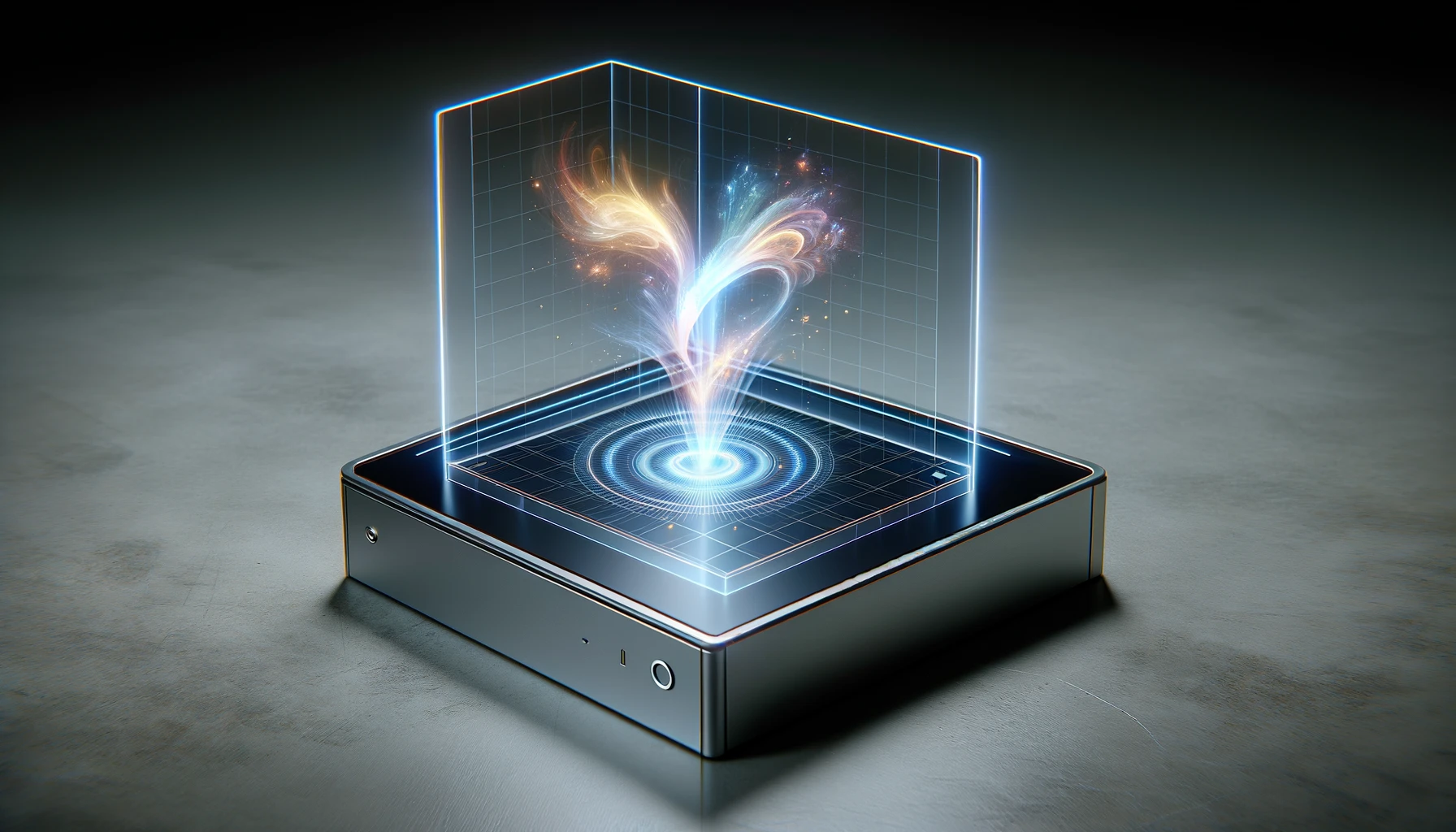
Hologram 3D creates the illusion of objects or characters appearing in space. This article explains its underlying principles, technologies, and applications at events.
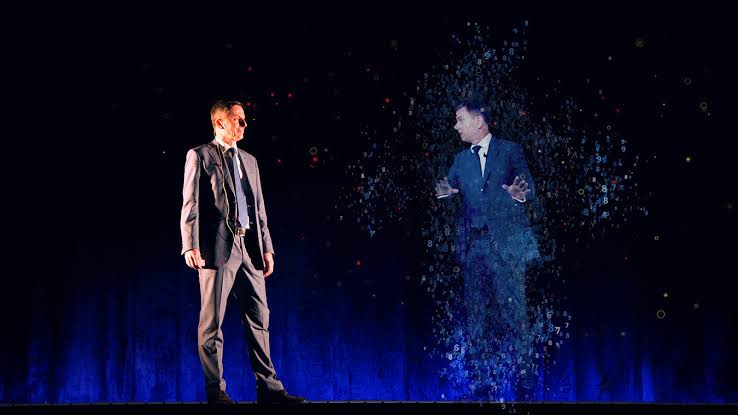
A remote speaker appearing on stage or a product rotating in mid-air can create a striking visual impact. These effects are often broadly referred to as 3D holograms, although they do not always involve true holography.
- 3D holograms create the impression that images are present in physical space.
- Events commonly use Pepper’s Ghost, transparent displays, LED fans, or light-field technology.
- The right solution depends on the event’s objectives, viewing angles, lighting conditions, venue, and content.
What Is a 3D Hologram?
A 3D hologram is an image that gives viewers a sense of depth or the presence of an object in space, rather than simply displaying content on a flat screen.
In scientific terms, a hologram records information about light waves, allowing a three-dimensional image to be reconstructed. Dennis Gabor was awarded the 1971 Nobel Prize in Physics for his invention and development of the holographic method, according to the Nobel Prize.
In the events industry, the term is used commercially to describe various illusion-based techniques. Businesses should clarify the underlying technology, equipment, viewing angles, and type of signal involved.
How 3D Holograms Work
True Optical Holography
In a basic setup, a laser beam is split into two beams. The object beam illuminates the subject and reflects onto a recording medium, while the reference beam travels directly to the same surface. The two waves interfere, producing an interference pattern that contains information about the amplitude and phase of the light.
When illuminated under the correct conditions, this pattern diffracts light and reconstructs the wavefront, creating a perception of depth. Brown University and the RP Photonics Encyclopedia, “Holography” by Dr. Rüdiger Paschotta describe this mechanism in detail.
Technologies Commonly Used at Events
Pepper’s Ghost reflects a concealed image source onto glass, acrylic, or a transparent film. Against a dark background, the subject appears to emerge in space. The Children’s Museum of Indianapolis identifies this technique as a reflection-based illusion.
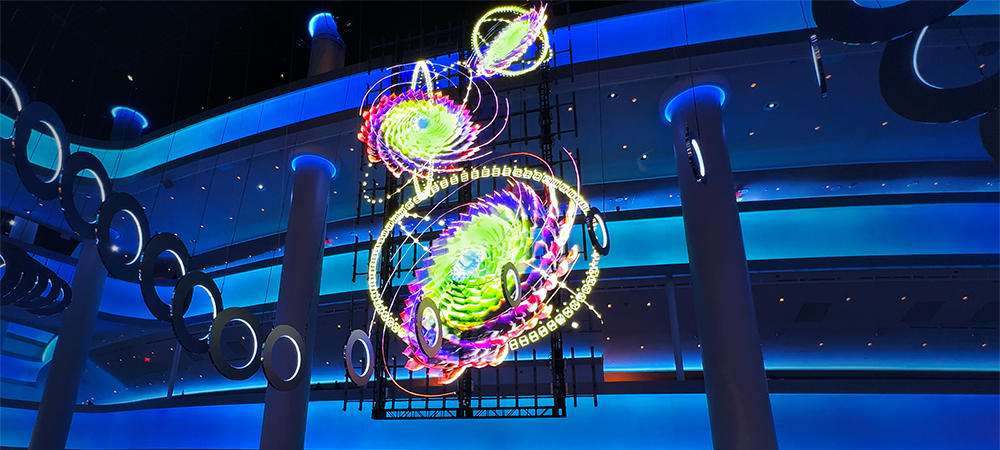
LED hologram fans rotate LED strips at high speed, creating the illusion of a floating image through persistence of vision. These devices work well for logos and exhibition booths, but their rotating blades must be properly enclosed.
Transparent displays and display enclosures combine screens, backgrounds, and optical structures to create depth effects. Light-field displays emit multiple viewing angles to deliver glasses-free 3D experiences. Looking Glass distinguishes depth-enhanced video displays from interactive light-field technology.
Comparing Hologram Technologies for Events
| Technology | Principle | Strengths | Limitations | Suitable Applications |
|---|---|---|---|---|
| Optical holography | Interference and diffraction | True optical depth | Difficult to implement for large moving images | Science, art, security |
| Pepper’s Ghost | Reflection on a transparent surface | Large-scale stage effects | Depends on dark backgrounds and viewing angles | Virtual speakers, product launches |
| Transparent displays/enclosures | Display combined with a spatial enclosure | Compact and easy to position | Limited perceived depth | Avatars, products, digital guidance |
| LED fans | Rotating LEDs and persistence of vision | Eye-catching and versatile | Requires a safety zone | Logos, 3D objects at booths |
| Light-field displays | Emission of multiple viewing angles | Glasses-free 3D viewing | Requires specialized equipment and content | Product models, museums |
| Gauze screens | Projection onto nearly transparent mesh | Covers large stage areas | Sensitive to ambient light | Performances, stage mapping |
No single technology is best for every situation. A small display may be convincing at close range, while a large stage requires careful consideration of brightness, image size, and sightlines for viewers seated farther away.
7 Applications of 3D Holograms at Events
1. Product Launches
Products can appear layer by layer, reveal their internal components, or change colors before the physical product is unveiled.
2. Remote Speakers
Full-body projections enhance the sense of presence. Successful delivery requires reliable cameras, audio, network connectivity, and backup signal systems.
3. Virtual Hosts and AI Avatars
Digital characters can introduce programs, guide guests, and handle predefined categories of questions when integrated with AI.
4. Artistic Performances
Artists perform alongside digital visual elements. Content must be synchronized with positioning, music, lighting, and movement.
5. Exhibition Booths
3D models help showcase products that are difficult to transport, allowing visitors to explore their internal structures without requiring the complete physical equipment.
6. Museums and Experience Centers
Historical figures, reconstructed artifacts, and scientific data can be presented through depth-enhanced visuals, supported by accurate content and subtitles.
7. Corporate Training
Holograms can simulate processes or scenarios that are difficult to observe in person, while also integrating interactive displays or QR codes.
Checklist for Choosing a 3D Hologram
Before finalizing a solution, businesses should clarify the following:
- Is the goal to attract attention, explain a product, enable interaction, or connect with a remote speaker?
- What are the viewing distances and audience movement patterns?
- To what extent can ambient lighting be controlled?
- Will the content be pre-recorded video, a real-time 3D model, or a live feed?
- Will the equipment be used indoors or outdoors?
- Does the setup need to synchronize with audio, lighting, or sensors?
- Are the structure, electrical systems, and moving components safe?
- Will there be a full rehearsal at the venue and a backup playback file?
A demonstration should be conducted under conditions as close as possible to the actual venue, as the experience is directly affected by lighting and sightlines.
What Determines the Cost of Implementation?
Costs include equipment, structural components, transportation, content production, system integration, and technical personnel. Pricing should not be based solely on screen size.
Equipment rental is suitable for short-term events. Long-term exhibitions may require custom solutions to optimize durability and content management.
A pricing brief should specify dimensions, duration, venue, lighting conditions, content type, interaction requirements, and scope of work.
Common Mistakes When Implementing Holograms
The biggest mistake is choosing the technology before defining the intended experience. LED fans are suitable for displaying logos at booths, but they cannot replace full-body images of speakers.
Other common issues include low-contrast content, incorrect image proportions, light shining onto projection films, overlooked sightlines, and inadequate rehearsals.
Designing Hologram Experiences with ADT Global
Successful projects require an integrated approach spanning concept development, scripting, content production, hardware, stage design, and operations. ADT Global advises on display solutions based on brand objectives, venue conditions, and the attendee journey.
Holograms can be combined with immersive experiences, interactive displays, motion sensors, AI avatars, or real-time 3D content. This transforms visual effects into purposeful brand touchpoints rather than standalone performances.
Contact ADT Global to assess your venue, develop a concept, and select the right 3D hologram technology for your event, exhibition, or experience center.