What is an Immersive Experience? 7 Applications for Brands
Immersive experiences take customers into a space with a story, allowing them to interact and participate. From exhibitions to retail, immersive experiences help businesses turn complex information into an understandable and measurable journey.
1. What Is Immersive Experience?
Immersive experience brings customers into a storytelling space, letting them interact and actively take part. From exhibitions to retail, immersive experiences help businesses turn complex information into a journey that’s easy to understand and possible to measure.
Immersive experience is an experience that creates a sense of presence and active participation. It can combine physical space, digital content, multisensory elements, AR, VR, MR, or AI. The core value lies not in the equipment itself, but in the ability to help customers understand, feel, and act.
What Is an Immersive Experience?
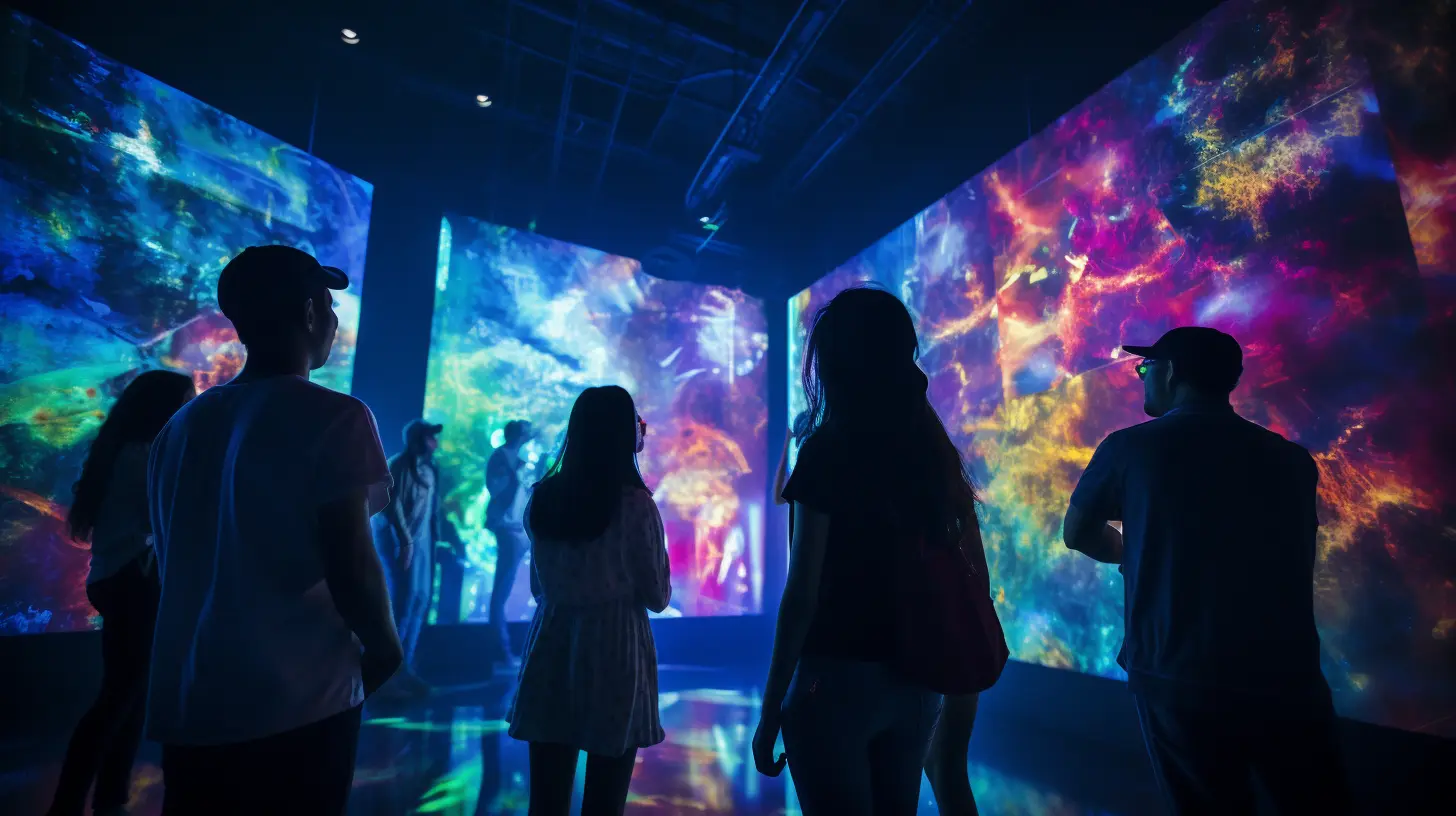
An immersive experience makes participants feel like they’re present inside the story rather than just observing it from outside. They can move around, make choices, or influence the content.
An experience doesn’t necessarily require VR headsets. A 360-degree projection room, sensors, directional sound, or a showroom that combines physical objects can all create a sense of immersion.
Microsoft describes mixed reality as the blending of the physical and digital worlds, enabling 3D interaction among people, computers, and the environment. This is just one branch of immersive experience. Source: Microsoft Learn
For brands, the goal is to create an intentional journey, where the story, the space, and the interaction all convey a single message together.
2. Components of an Immersive Experience
An effective immersive experience combines five components:
Story: what the brand wants visitors to remember.
Space: entry points, stopping points, and the flow of movement.
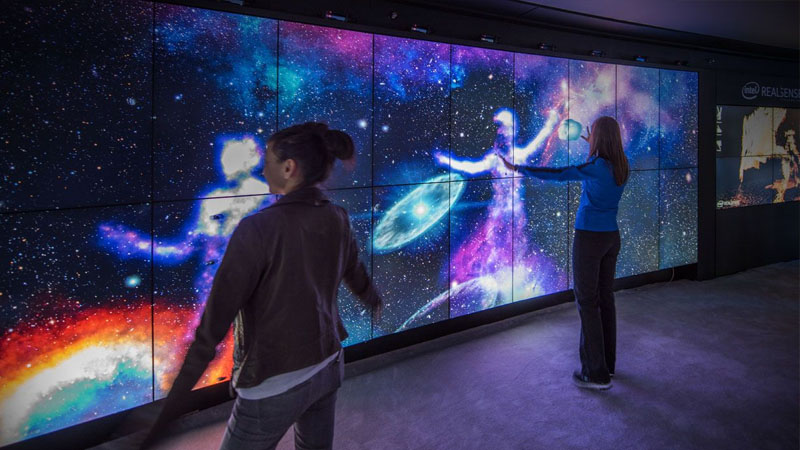
Multisensory elements: visuals, sound, lighting, and materials.
Interaction: actions that trigger a meaningful response.
Technology: activation, personalization, and content capture.
These components must all serve the same goal together. A weak story or confusing interaction will reduce the overall effectiveness.
| Concept | Focus | Example |
|---|---|---|
| Immersive experience | Presence within a journey | A 360-degree projection room |
| Interactive experience | Actions that trigger a response | A screen that responds to choices |
| AR | Digital content layered onto the real environment | Viewing a virtual product in a room |
| VR | The user steps into a digital environment | A simulated virtual factory |
| MR | Real and digital objects interacting | Guidance using a 3D model |
A single project can combine several of these concepts. Businesses should choose based on their goal, not based on technology trends.
3. Seven Immersive Experience Applications for Brands
1. Brand activations and product launches
In an activation campaign, an immersive experience turns a message into an activity: visitors explore, complete a challenge, or receive a personalized result.
An LED tunnel can tell the story of a product’s development journey, then lead visitors to a trial area. This model works well for launching or repositioning a product.
2. Interactive exhibition booths
At an exhibition, a business only has a few minutes to explain its solution. Screens, projection mapping, sensors, and physical models turn technical data into a visual story.
The journey should guide visitors from the problem to the result. For B2B, the end point should open into a conversation or a lead-capture form.
3. Showrooms and brand experience centers
An immersive experience center can guide visitors through a company’s history, capabilities, products, and vision, rather than simply displaying items by zone.
Interactive screens can reveal multiple layers of information, and an AI avatar can guide visitors based on their needs. Content that’s updated with each campaign lets a business get long-term use out of the same infrastructure.
4. Heritage and brand history storytelling
Immersive storytelling combines archival material, sound, and space to convey a founder’s story, milestones, and organizational values in a way that’s more emotionally resonant than a wall of text.
teamLab Borderless shows how content can move between spaces and encourage visitor participation. Brands can learn from how its story responds to people and the environment. Source: teamLab Borderless
5. Retail and pre-purchase product experiences
Immersive commerce helps customers picture a product in the context where they’ll actually use it. AR can let shoppers try out furniture, colors, or configurations before buying. IKEA Place once let users place 3D products in a real space. Source: IKEA
In-store, screens can display content tailored to the product a customer is currently looking at. Any interaction data collected must be gathered transparently.
6. Training and internal communications
Businesses can simulate processes, safety scenarios, or incident response in a controlled environment. Staff get to practice and receive feedback instead of just reading about it.
In internal communications, interactive spaces help employees understand strategy and culture. Content should be broken into short tasks with clear completion criteria.
7. Data visualization and operational systems
In energy, manufacturing, or real estate, an immersive environment combined with a digital twin can visually present assets, equipment status, and operational scenarios.
Leaders can view the overall picture, then drill down into the areas that need attention. The data source, latency, and last-update time should be clearly labeled to avoid a simulation being mistaken for real-time data.
4. Choosing Technology Based on the Experience’s Goal
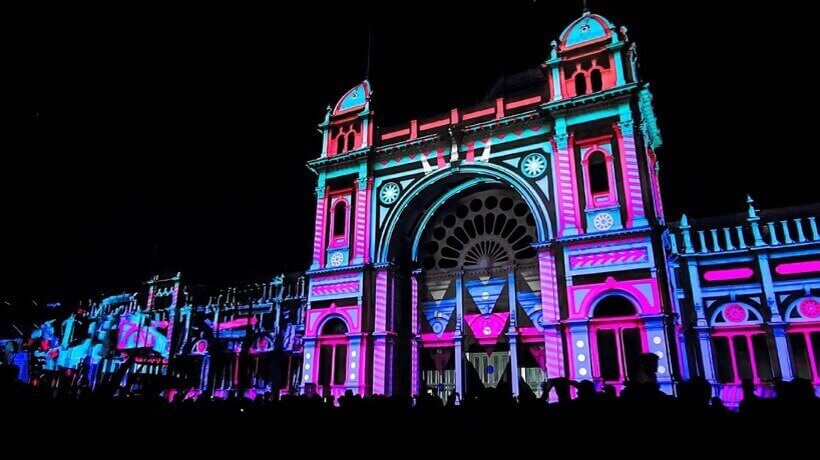
LED and projection mapping suit large-scale content; sensors support interaction among multiple people at once. AR attaches content to the real environment, while VR simulates places that are hard to access. AI avatars support guided tours, while digital twins visualize operations.
Start with the goal, the users, and the context. One well-placed screen can be more effective than a VR setup that doesn’t fit the actual visitor flow.
5. The Immersive Experience Design Process
The process has six steps:
Define the goal: choose the behavior you want to create.
Research users: clarify their available time and barriers to access.
Develop the concept: settle on one central message.
Design the scenario: define the entry point, the interactions, and the CTA.
Test: observe users, measure time, and fix confusing points.
Optimize: track data, equipment issues, and feedback.
Content, design, technology, and operations need to coordinate from the start to avoid a disjointed experience.
6. Measuring Effectiveness
KPIs should track the goal, not just visitor counts.
| Goal | Suggested Metrics |
|---|---|
| Attraction | Visits, drop-off rate, traffic source |
| Engagement | Time spent, completion rate |
| Recall | How well the message is remembered after the experience |
| Conversion | Leads, bookings, trials, or purchases |
| Reach | Shares, user-generated content |
| Operations | Uptime, error rate |
Define KPIs before production so the right data gets captured. The consent mechanism for data collection also needs to be clear.
7. Mistakes to Avoid
Choosing the technology before defining the story.
Packing too many effects into the same space.
Creating confusing interactions or long wait times.
Overlooking accessibility.
Depending on internet connectivity with no fallback plan.
Building content that’s hard to update.
A good experience should be easy to enter, easy to understand, and have a clear exit.
Conclusion
Immersive experience creates a sense of presence, interaction, and emotional connection. It isn’t limited to VR or to the number of screens used. When it starts from a business goal, an immersive experience helps a brand explain its products, stand out, and convey complex data.
Businesses should start small and in a measurable way. Testing helps balance creativity with operational practicality.
Contact ADT Global for guidance on designing interactive spaces, immersive experiences, digital twins, and technology solutions that fit your brand’s goals.
Frequently Asked Questions
What is an immersive experience?
It’s an experience that creates a sense of presence and participation within a designed environment.
Does an immersive experience require VR headsets?
No. An experience can use projection, sound, sensors, AR, or physical space.
Are immersive experience and experiential marketing the same thing?
Experiential marketing is a strategy for connecting with people through experiences. Immersive experience is a method with a high degree of presence and participation.
What factors affect deployment cost?
Cost depends on the area involved, content, equipment, data integration, operation, and maintenance.
How can you tell if an immersive project is effective?
Measure time spent, completion rate, message recall, conversion, and stability.