What is 3D OOH? Production and implementation process in Vietnam
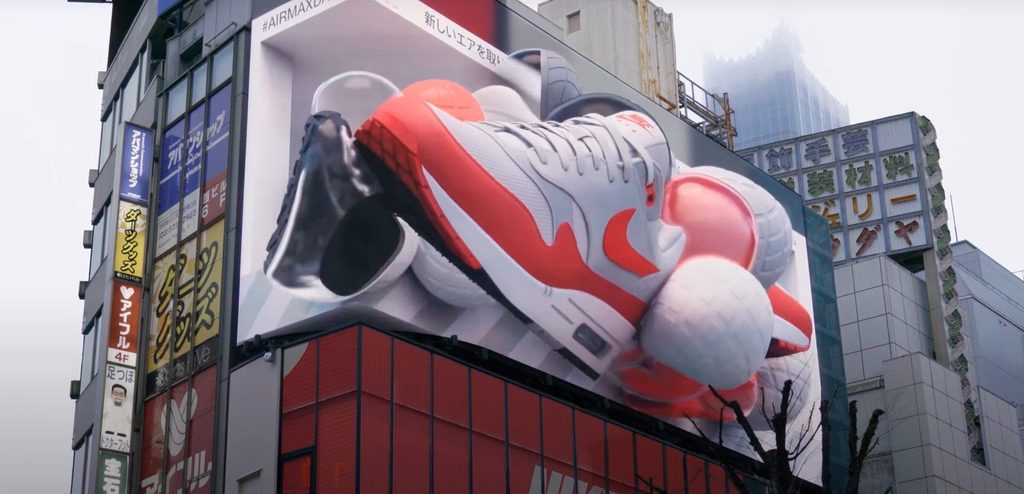
Screens that make products appear to leap out of the frame often create strong appeal in crowded places. This effect is called 3D OOH. A successful campaign must combine idea, viewing angle, screen structure, 3D production technique, and operations.
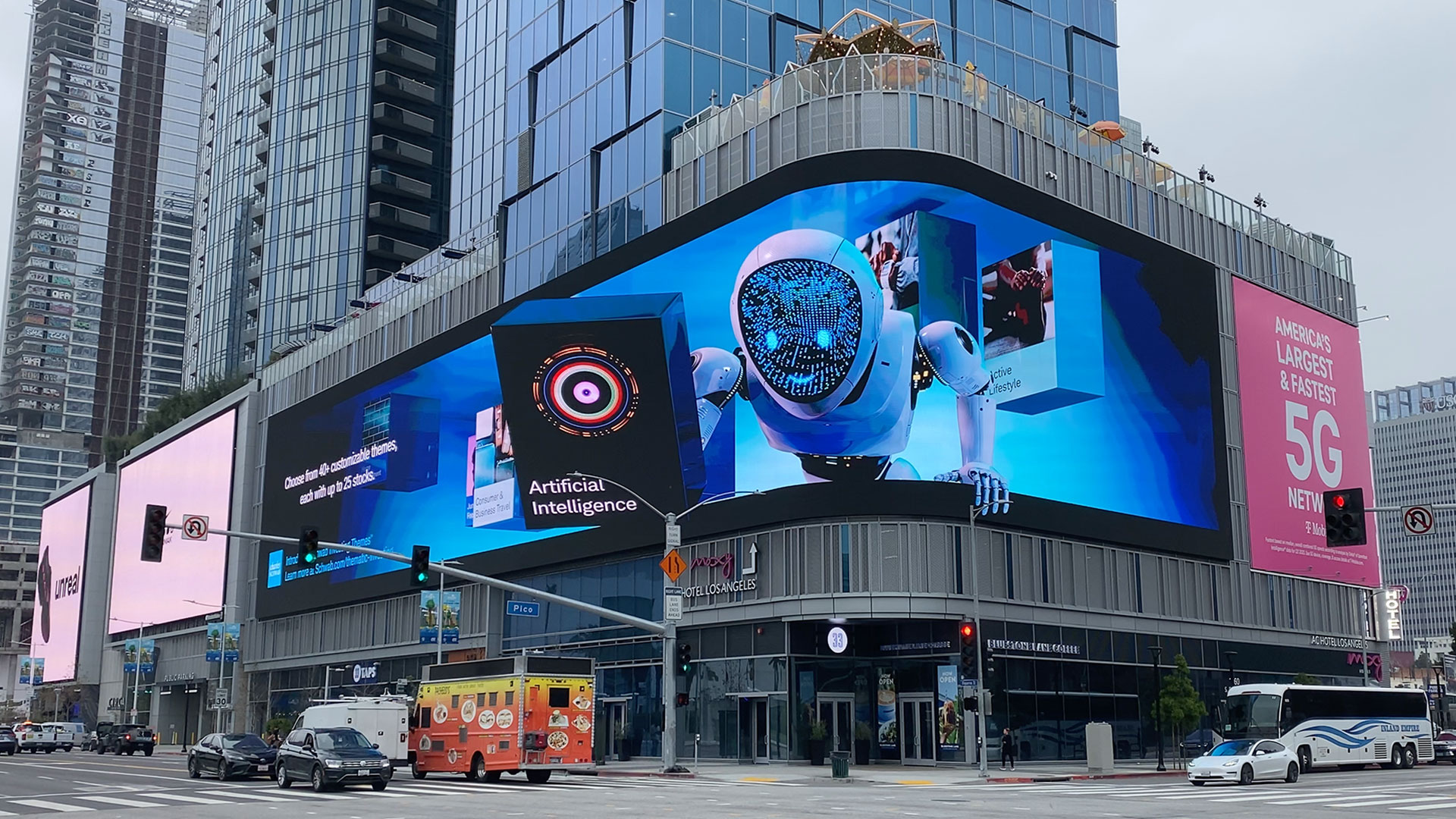
Screens that make products appear to leap out of the frame often create strong appeal in crowded places. This effect is called 3D OOH. A successful campaign must combine idea, viewing angle, screen structure, 3D production technique, and operations. So what is 3D OOH, and how is it deployed in Vietnam?
3D OOH is outdoor advertising that uses perspective-based content to create an illusion of depth without glasses. The process includes survey, defining the viewing angle, ideation, 3D modeling, mapping, rendering, testing, and operation. In Vietnam, a project must also review zoning, structure, safety, and local regulations.
1. What is 3D OOH?
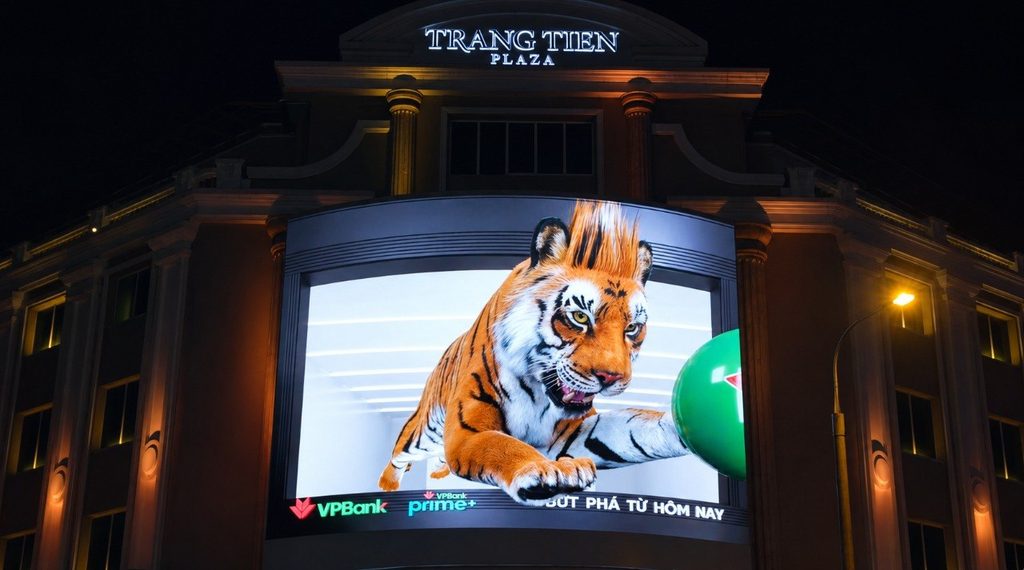
3D OOH stands for 3D Out-of-Home Advertising. This format creates the feeling that an object has depth or extends beyond the flat plane of the screen.
Most content uses the anamorphic technique. Images are transformed according to a pre-calculated viewing angle. From the right viewing zone, the perspective lines form a three-dimensional space without the need for glasses.
The effect can be played on a flat LED screen or a corner screen. An L-shaped screen supports depth, but it is the content, viewing angle, and contrast that determine the illusion.
3D OOH is still a form of DOOH, or digital out-of-home advertising. The difference lies in how the perspective is designed.
2. How is the 3D OOH effect created?
The illusion is formed from four elements:
- Primary viewing angle: The position where the effect is perceived most clearly.
- Spatial framing: Floor, ceiling, and edge lines create depth.
- Lighting and shadows: Help the object feel anchored in its environment.
- Motion: The object moves forward, backward, or interacts with the edge of the frame.
An off-axis viewing angle distorts the image. Motion that is too fast prevents viewers from recognizing the product. Incorrect shadows make the object look unrealistic.
Therefore, size, aspect ratio, curvature, and viewing position must be finalized before production.
3. Distinguishing 3D OOH from other formats
| Format | Characteristics | Viewer’s device |
|---|---|---|
| Static OOH | Printed image on a billboard | Not required |
| 2D DOOH | Video on a digital screen | Not required |
| 3D OOH | Perspective that creates depth | Not required |
| AR OOH | Digital content through a camera | Phone |
| VR activation | Virtual environment | VR headset |
3D OOH suits quick impact. AR or VR is better suited to multi-layered personal interaction.
4. When should a brand choose 3D OOH?
This format suits cases where the product has a distinct shape or the story can be condensed into a few seconds. It is often used for product launches, characters, or technology.
The screen needs a wide viewing zone, suitable foot traffic, and enough time for viewers to see the message. Areas where people wait are sometimes better than fast-moving routes.
3D should not be chosen merely to go viral. If the message is complex or the viewing angle is poor, 2D DOOH may be a better fit.n.
5. 3D OOH Content Production Process
Step 1: Define the goal and message
Settle on the desired behavior: product awareness, remembering a feature, or visiting a link. A short video should carry only one message.
Step 2: Survey the screen and location
Collect pixel dimensions, aspect ratio, curvature, viewing distance, direction of foot traffic, and lighting. On-site data helps position the 3D camera correctly.
Step 3: Determine the optimal viewing angle
Place the virtual camera according to the primary viewing zone to calculate the perspective. Also check secondary viewing zones to limit distortion.
Step 4: Develop the idea and storyboard
The script describes the object, its motion, when the brand appears, and the closing frame. The storyboard must show the correct viewing angle.
Step 5: Build models and animation
The production team creates the models, materials, lighting, and motion. The product must match brand identity. Fluid or cloth simulations should be planned for early.
Step 6: Mapping and rendering to the screen
Content is transformed to fit the LED structure. Seams must align; exported files must have the right codec, frame rate, color, and operating specifications.
Step 7: On-site testing
A preview on a computer is no substitute for the real location. Test playback from multiple positions and check brightness, color, text, motion, and safe zones.
Step 8: Finalize and hand over
After adjustments, confirm the version, the playback schedule, the technical contact, and a fallback plan for failures. Archive the source files, playout files, and the acceptance record.
6. 3D OOH Deployment Process in Vietnam
The project requires coordination among the screen owner, the media agency, the technical team, and the party responsible for legal matters.
First, verify that the location complies with the local advertising master plan. If building or installing a screen, review the structure, materials, electrical work, lightning protection, and fire safety. QCVN 17:2018/BXD applies to outdoor advertising media, including screens dedicated to advertising. Reference: QCVN 17:2018/BXD
Next, check the content, image rights, trademarks, and whether the product belongs to a conditionally regulated industry. Procedures may differ by screen and locality.
Outdoor screens need controls on brightness, operating hours, and traffic impact. Decree 87/2026/NĐ-CP on penalties in the fields of culture and advertising takes effect on May 15, 2026. Source: Government Electronic Portal
Regulations may change. This checklist does not replace verification with the competent authority.
7. Specifications to Finalize Before Production
| Category | Items to confirm |
|---|---|
| Screen | Pixels, aspect ratio, number of faces, seam areas |
| Location | Viewing angle, direction of foot traffic, obstructions |
| Content | Duration, logo and text zones |
| Playout file | Codec, frame rate, color space, file size |
| Operations | Test schedule, monitoring, backup plan |
| Legal | Content, ownership rights, related procedures |
Finalizing specifications in writing helps avoid cropped content or having to re-render.
8. Measuring Campaign Effectiveness
3D OOH should not be judged by social media views alone. Combine outdoor metrics with post-exposure metrics.
- Estimated foot traffic and number of plays.
- Visibility in the primary viewing zone.
- Brand or message recall.
- QR scans, site visits, or brand searches.
- Shares and user-generated content.
- Screen uptime rate.
Each metric needs a clear data source. Do not attribute all growth to the screen when the campaign runs across multiple channels.
9. Common Mistakes
- Building content before the screen specifications are available.
- Optimizing for a single screenshot without checking the full motion.
- Placing logos or text at seams and cropped edges.
- Overusing objects flying out of the screen without a story.
- Using motion that is too fast or contrast that is too low.
- Not testing at the actual lighting conditions of the playback time.
- Lacking a backup version in case a file or screen fails.
- Overlooking legal documentation and local regulations.
Conclusion
Understanding what 3D OOH is helps businesses treat it as an integrated project, not just a CGI video. The effect comes from viewing angle, modeling, lighting, mapping, and operations.
In Vietnam, you should survey the screen and review legal requirements from the ideation stage. This approach reduces revision rounds and improves feasibility.
Contact ADT Global to discuss ideas, 3D content design, display technology, and plans for deploying brand experiences on outdoor screens.
Frequently Asked Questions
What is 3D OOH?
It is outdoor advertising that uses perspective to create an illusion of depth without glasses.
Does 3D OOH require a corner screen?
No. A flat screen can still create the effect from a pre-calculated viewing angle.
How long does it take to produce a 3D OOH video?
It depends on complexity, review rounds, simulation, rendering, and testing.
Can one video be used for multiple screens?
It is not recommended. Each screen has a different aspect ratio, pixel count, seam areas, and viewing angle.
What should be considered when deploying 3D OOH in Vietnam?
Check zoning, documentation, structure, safety, brightness, and local regulations.