
Vietnamese Sovereign AI: The Platform for Businesses to Own Their Data and AI Processes
Sovereign AI doesn't necessarily mean locking down the system or building all the technology yourself, but it emphasizes having the right to choose, the ability to verify, and reducing dependence on a single provider.

Vietnamese Sovereign AI is the capability of an organization to control its data, deployment infrastructure, AI models, operational processes, and AI governance mechanisms according to its own requirements. Sovereign AI does not necessarily mean operating within a closed system or developing every technology in-house. Instead, it emphasizes freedom of choice, verifiability, and reduced dependence on a single provider.
As AI becomes involved in decision-making, workflow orchestration, and operational system integration, enterprises need to know where their data is processed, who has access to it, which models are being used, and what happens when a provider changes its policies. Sovereign AI is not intended to isolate organizations from global technology; rather, it enables them to retain decision-making authority over their core assets and processes.
1. What Is Vietnamese Sovereign AI?
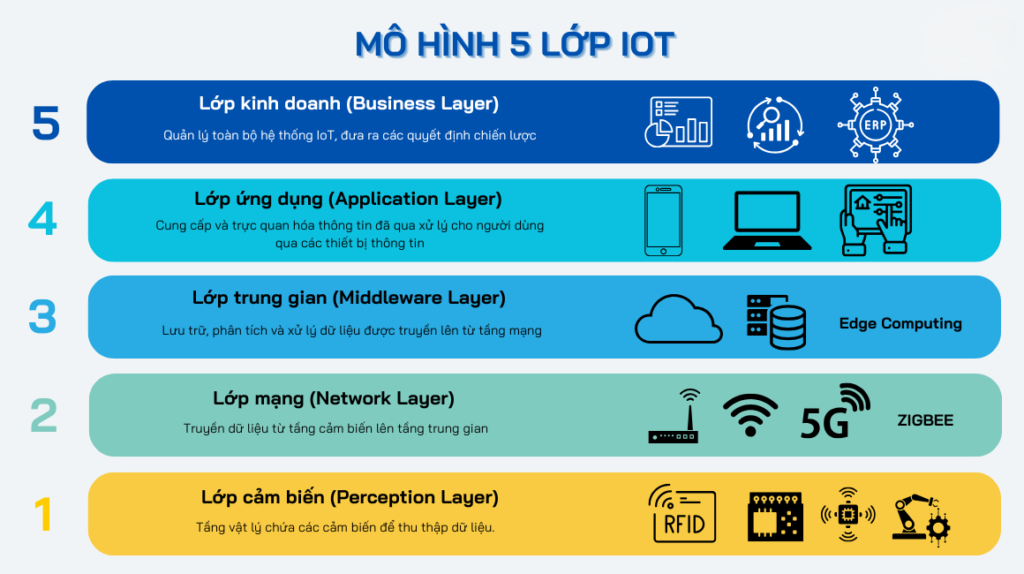
Sovereign AI refers to the ability to independently deploy and govern AI in accordance with the objectives, regulations, and interests of a country or organization. At the enterprise level, this capability encompasses five layers:
- Data: Knowing which data is used, where it is stored, with whom it is shared, and how long it is retained.
- Infrastructure: Choosing between on-premise deployment, private cloud, domestic infrastructure, or a suitable hybrid architecture.
- Models: Maintaining the flexibility to select, replace, or combine AI models rather than relying entirely on a single API.
- Processes: Defining what AI is permitted to do, which steps require approval, and how exceptions are handled.
- Governance: Controlling identities, access permissions, activity logs, risks, and the responsibilities of relevant stakeholders.
Sovereign AI extends beyond hosting servers in Vietnam. Data may be stored domestically, yet an enterprise can remain dependent on external providers if it lacks control over its models, orchestration logic, or operational logs.
Explore TopAgent IC, a sovereign AI platform designed for Vietnamese organizations, institutions, and enterprises.
2. Why Is Sovereign AI Becoming Essential for Vietnamese Enterprises?
AI is increasingly being integrated into email, document management, customer service, manufacturing, and logistics. As a result, enterprises must simultaneously leverage AI effectively, protect their data assets, and maintain long-term operational resilience.
Vietnam’s policy landscape is also evolving rapidly. The National Strategy on Artificial Intelligence to 2030, with a Vision to 2045 was approved under Decision No. 1671/QĐ-TTg dated August 28, 2026. Previously, the Law on Artificial Intelligence No. 134/2025/QH15 took effect on March 1, 2026, while the Law on Data No. 60/2024/QH15 took effect on July 1, 2025.
Together with the personal data protection framework and the Law on Cybersecurity No. 116/2025/QH15, these regulations provide a clearer governance context. Enterprises must still assess applicable requirements based on their industry and data types; this article does not replace legal advice.
From an operational perspective, enterprises need to answer the following questions:
- Can their data be used to train or improve external services?
- Can they switch models without rebuilding the entire application?
- Who is authorized to assign tasks to AI Agents, and who approves their outputs?
- Are audit logs available to trace system decisions or actions?
- How does the system operate when connectivity is lost or a provider experiences an outage?
3. Five Architectural Layers of a Sovereign AI Platform
3.1. Data Sovereignty
Enterprises need to know what data is being used, who owns it, where it is stored, and with whom it is shared. Customer data, personnel records, and manufacturing trade secrets require different policies. For generative AI, organizations must distinguish between data provided as retrieval context and data used to fine-tune or train models.
3.2. Infrastructure Sovereignty
On-premise deployment is suitable for sensitive data or internal systems; private cloud provides a more isolated and scalable environment; hybrid architectures distribute workloads across suitable infrastructure. Enterprises must know where workloads run, which data is permitted to leave controlled environments, and what contingency measures are available when a component becomes unavailable.
3.3. Model Sovereignty
A flexible architecture should allow enterprises to select models for specific tasks and replace them when necessary, reducing exposure to cost, performance, and usage-policy risks. Organizations do not necessarily need to develop foundation models themselves. Control can instead come from choosing open or commercial models, determining where they are deployed, and applying independent evaluation criteria.
3.4. AI Workflow Sovereignty
When AI Agents can send emails, create production orders, or coordinate robots, risks extend beyond generated content to real-world actions. Enterprises need to define:
- Which Agents can access specific tools and data sources.
- Which actions can be executed automatically and which require human confirmation.
- Limits on transaction value, time, location, or affected entities.
- How to stop, roll back, or switch to manual handling when exceptions occur.
Business logic must remain under the organization’s control rather than being entirely hidden within external services.
3.5. Governance and Safety Sovereignty
Systems need user authentication, least-privilege access controls, activity logging, and post-incident audit capabilities. Models and Agents should be evaluated periodically for quality, data leakage, and out-of-scope behavior. Critical tasks must include human approval and emergency stop mechanisms.
4. How Does Sovereign AI Differ from On-Premise, Private AI, and Domestic Data Storage?
| Concept | Primary focus | What it does not guarantee on its own |
|---|---|---|
| Domestic data storage | The physical or legal location of data | Does not automatically ensure control over models and workflows |
| On-premise AI | Systems running on an organization’s own infrastructure | Does not automatically ensure effective governance, model portability, or AI quality |
| Private AI | An AI environment with restricted access and safeguards for private data | May still depend on a single technology or provider |
| Sovereign AI | End-to-end control over data, infrastructure, models, workflows, and governance | Does not require an enterprise to develop all its own technology |
These concepts can complement one another. On-premise or private cloud is a deployment option; Private AI defines how access is restricted; Sovereign AI is the broader capability that enables enterprises to retain decision-making authority.
5. Business Value of Sovereign AI in Vietnam
- Protecting intellectual assets: Control the flow of internal documents, customer data, and proprietary business knowledge.
- Reducing technology dependency: Modular architectures, open APIs, and data portability make it easier to replace components when necessary.
- Adapting to the Vietnamese context: Evaluation criteria can reflect the Vietnamese language, industry terminology, and local business processes.
- Controlling costs and performance: Allocate tasks to suitable models and infrastructure instead of always using the largest available model.
- Building a foundation for AI Agents and Physical AI: Control permissions and action boundaries when AI connects to ERP, MES, WMS, robots, or IoT systems.
6. From Data Control to AI Workflow Sovereignty
An internal data repository only creates value when its contents are incorporated into workflows with defined objectives, permissions, and KPIs. In a factory, AI can consolidate data from MES, WMS, sensors, and robot fleets to identify bottlenecks. However, the system should issue commands only within its authorized scope, with safety rules and provisions for human intervention.
This is where Vietnamese Sovereign AI intersects with integrated robotics: enterprises retain control over both their data and how that data is translated into action.
7. Roadmap for Building Sovereign AI in Enterprises
Step 1: Inventory Data and Use Cases
Identify source systems, data owners, and AI use cases. Prioritize workflows with clear business value and measurable outcomes.
Step 2: Classify Risks
Assess data sensitivity, the potential impact of errors, and the level of authority granted to AI. A retrieval assistant requires different controls from an Agent authorized to create transactions or control devices.
Step 3: Choose a Deployment Architecture
Allocate workloads across on-premise infrastructure, private cloud, and external services. Avoid tightly coupling applications to a single AI model.
Step 4: Design Permissions and Oversight Mechanisms
Implement role-based access controls, approval requirements for critical actions, audit logs, and incident response procedures. Assign clear responsibility for data, models, and business outcomes.
Step 5: Run a Pilot Using Real-World KPIs
Measure processing time, completion rates, intervention levels, quality, costs, and incidents within actual workflows.
Step 6: Standardize for Scalability and Replaceability
Before scaling, verify the ability to export data, switch models, integrate new systems, and maintain operations when a component becomes unavailable.
8. Common Misconceptions About Sovereign AI
- It must operate entirely offline: Not necessarily, provided data flows and control boundaries are clearly defined.
- Enterprises must build their own large models: Not required; the ability to select, evaluate, and replace models is more important.
- Having on-premise servers is enough: Infrastructure is only one layer; access governance, logging, and workflow controls are also essential.
- More control is always better: The level of control should be proportionate to risk to avoid unnecessary costs and reduced scalability.
- It is only for large organizations: Small and medium-sized enterprises can start with a critical dataset and a specific workflow.
Conclusion
Vietnamese Sovereign AI is neither a standalone product nor a server location. It is the capability that enables enterprises to determine how their data is used, where AI runs, which models are selected, what actions Agents are permitted to perform, and who is accountable when problems arise.
Enterprises should start with their most valuable data and workflows, then build an architecture that is open enough to support technology choices yet sufficiently controlled to manage risks. When all five layers of control work together, AI becomes an operational capability that organizations can genuinely govern.
Frequently Asked Questions (FAQ)
What is Vietnamese Sovereign AI?
It is the capability of Vietnam or domestic organizations to independently control AI data, infrastructure, models, workflows, and governance in accordance with their objectives and applicable requirements.
Is Sovereign AI the same as on-premise AI?
No. On-premise is a deployment method. Sovereign AI is broader, encompassing model selection, data control, Agent governance, traceability, and reduced provider dependency.
Do enterprises need to build their own AI models?
Not necessarily. Enterprises can use open or commercial models, provided they have mechanisms for model selection, evaluation, data control, and replacement when needed.
Must all data be stored entirely in Vietnam?
Requirements depend on the type of data, industry, relevant parties, and applicable regulations. Enterprises should conduct a specific legal assessment rather than assume that Sovereign AI simply requires all data to be stored in one location.
Where should small and medium-sized enterprises start?
Choose a workflow with clearly defined data, classify its risks, establish access permissions, and test the solution on a scalable architecture. There is no need to build an entire platform from the outset.
How can enterprises evaluate whether an AI platform is sovereign?
Assess where data is processed, retention policies, ownership of outputs, private deployment options, model selection and replacement capabilities, access controls, auditability, and the ability to maintain operations if a provider or component becomes unavailable.